UAE E-Invoicing Use Cases In Tax
Learn how Tax Star handles all 16 UAE e-invoice types over PEPPOL, with support for QuickBooks, Xero, Zoho, Odoo, Naqood and Wafeq.
UAE E-Invoicing for Free Zone Companies: What Changes?
Learn how UAE e-invoicing applies to Free Zone companies, including the Free Trade Zone flag, beneficiary details, invoice data, and testing.
How to Use QuickBooks for UAE E-Invoicing with Tax Star
See how QuickBooks Online works with Tax Star for UAE e-invoicing, from invoice creation and data checks to PINT-AE, Peppol, credit notes, and tracking.
UAE e-invoicing service providers: questions to ask before you sign
Compare UAE e-invoicing service providers by asking about MoF status, Peppol, ERP integration, PINT AE, security, support, SLAs, and pricing.
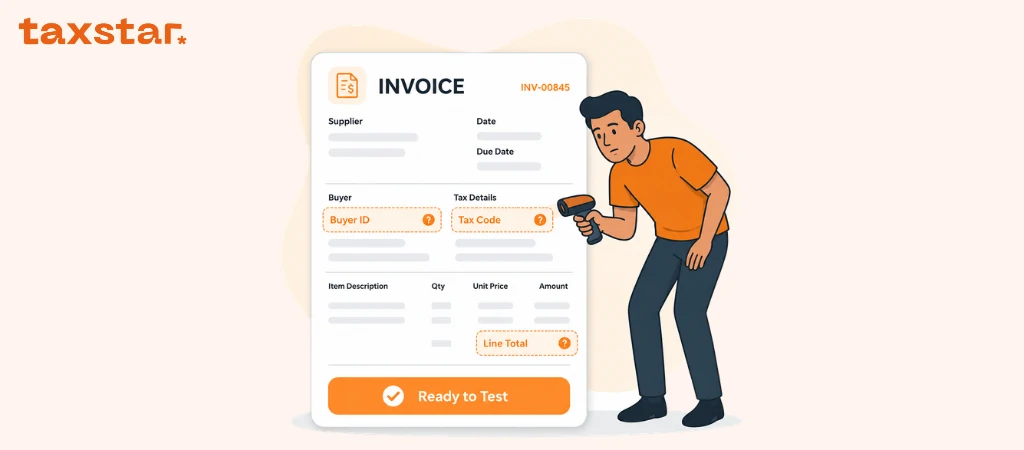
PINT AE mandatory fields: 10 data gaps to check before testing
Check the PINT AE mandatory fields UAE finance and ERP teams should review before e-invoice testing, from buyer data to tax codes and totals.
UAE e-invoicing penalties: what happens if your business misses the deadline
Learn UAE e-invoicing penalties for missed ASP deadlines, e-invoice issues, e-credit notes, system failures, and data change delays.
UAE e-invoicing ASP deadline: what AED 50M+ businesses must do before 30 October 2026
AED 50M+ UAE businesses must appoint an ASP by 30 October 2026. See what to check now before the 1 January 2027 go-live date.
UAE e-invoice rejection: the fastest fix workflow your team can follow
A clear UAE e-invoice rejection workflow to help teams read the failure, fix the root cause, retest the case, and stop repeat issues.
UAE e-invoicing deadline extended: what this means for businesses now
The UAE e-invoicing ASP deadline moved to 30 October 2026 for businesses above AED 50 million. Here is what changed and what to do now.
PINT format UAE: what PINT AE changes in your invoice data
Learn how PINT AE changes UAE invoice data, from buyer details and tax codes to scenario flags, AED values, totals, and line item fields.
Peppol Access Point versus Accredited Service Provider UAE: what is the difference
Learn the difference between a Peppol Access Point and an Accredited Service Provider in the UAE, and what businesses should check before onboarding.
UAE e-invoice validation errors: what the messages really mean
Learn what UAE e-invoice validation errors really mean, from missing fields and wrong codes to totals mismatches, exchange failures, and reporting issues.
ASP onboarding checklist UAE: what to prepare before you connect
A practical ASP onboarding checklist for UAE e-invoicing, covering EmaraTax, TIN, participant setup, data handoff, security, and testing prep.
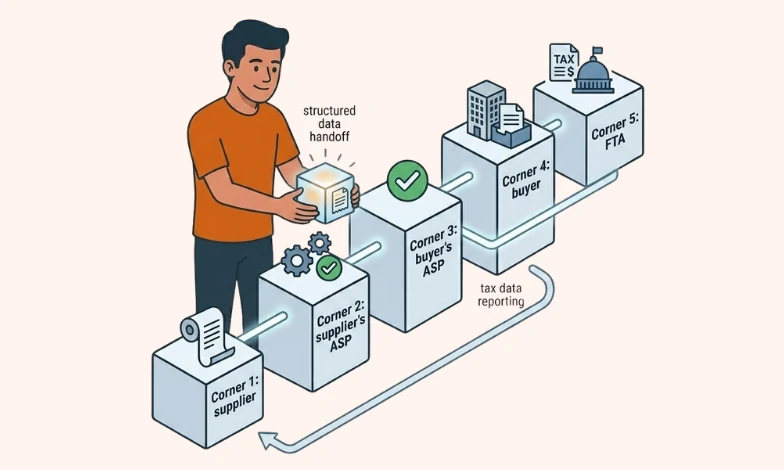
Peppol 5 corner model UAE: the simple breakdown for finance teams
Learn the UAE Peppol 5 corner model from a finance team angle, including handoffs, checks, confirmations, reporting, and day to day ownership.
Common e-invoicing errors UAE teams keep repeating and how to stop them
Learn the common UAE e-invoicing errors teams keep repeating, why they happen, and how to stop them before testing and go live.
Accredited Service Provider UAE: how to choose the right ASP
Learn how to choose the right Accredited Service Provider in the UAE, what to check before signing, and how to avoid slow onboarding later.
PINT AE explained: the UAE e-invoicing data dictionary in simple term
Learn what PINT AE means in UAE e-invoicing, which fields it controls, how scenarios change the data, and what businesses should prepare right now.
Peppol UAE explained: how invoices move through the network model
Learn how the Peppol UAE network model works, how invoices move through the 5 corner flow, what ASPs do, and what businesses still need to manage.
UAE e-invoicing rollout phases explained in plain language
Understand the UAE e-invoicing rollout phases in plain language, from pilot and voluntary use to mandatory implementation and what each stage means.
What to do 90 days before your UAE e-invoicing go live date
A practical 90 day plan for UAE e-invoicing go live, covering ASP onboarding, EmaraTax checks, data readiness, testing, and error handling.
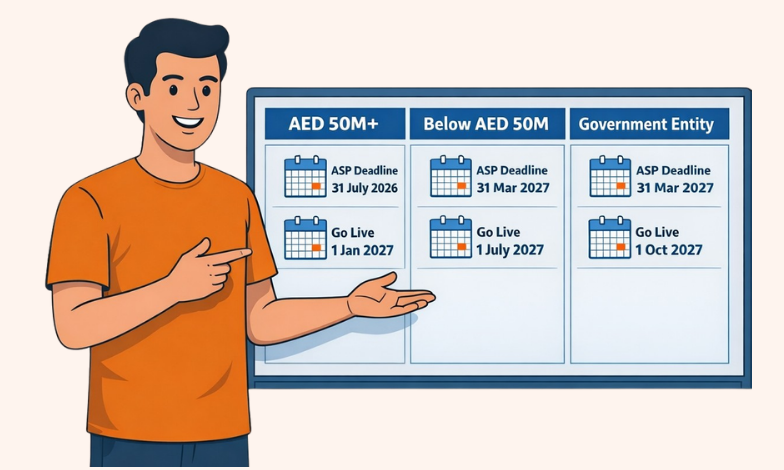
UAE e-invoicing go live dates: which segment are you in
Find your UAE e-invoicing segment, check your ASP deadline and go live date, and learn how revenue and entity type affect your rollout plan.
UAE e-invoicing timeline: what happens between pilot and go live
Learn what happens between the UAE e-invoicing pilot and go live, from invited testing and voluntary use to ASP onboarding, testing, and phased deadlines.
XML or JSON for UAE e-invoicing: what businesses need to prepare
Learn whether XML or JSON matters more for UAE e-invoicing, what the official format is, where JSON still fits, and what businesses should prepare now.
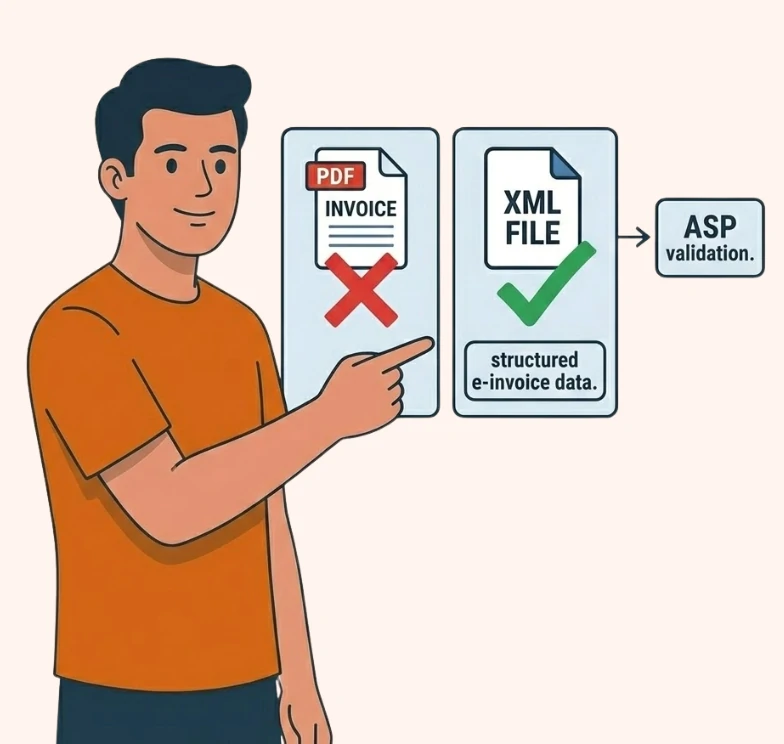
PDF versus e-invoice UAE why a PDF is not enough anymore
Learn why a PDF is no longer enough for UAE e-invoicing and what businesses need to do to prepare for structured digital compliance.
UAE e-invoicing updates: what changed and what finance teams should do next
A practical breakdown of UAE e-invoicing updates, pilot start, phased go live dates, VAT group grace period, ASP steps, and penalties. Plus next actions
What counts as an e-invoice in the UAE and what does not
Learn what counts as an e-invoice in the UAE, what does not, and how structured e-invoice data, XML, PINT-AE, and ASPs fit in.
UAE e-invoicing requirements checklist for finance teams
A practical UAE e-invoicing requirements checklist for finance teams. Learn what counts as an e-invoice, what data must be ready, how PINT AE mapping works, and what to prep before onboarding an Accredited Service Provider
Understanding e-invoicing: Key technical terms and concepts you should be familiar with
E-invoicing is becoming the global standard for tax authorities, but its complex terminology can be overwhelming

.webp)
.webp)
.webp)
.webp)
.webp)
.webp)
.webp)
.webp)

.webp)
.webp)


.webp)


.webp)

.webp)
.webp)
.webp)
.webp)
.webp)
