
PDF versus e-invoice UAE why a PDF is not enough anymore
.webp)
A PDF invoice still feels like the default for a lot of teams. It is familiar. It is easy to send. It looks official.
UAE e-invoicing is not built around what the invoice looks like. It is built around what the invoice is.
That is where the shift happens. The invoice needs to exist as structured e-invoice data that systems can read, validate, and process. A PDF can sit next to it as a readable copy. It just cannot be the main thing anymore.
The real difference between a PDF and an e-invoice
A PDF is a document made for people.
An e-invoice is made for systems.
So the “PDF versus e-invoice UAE” question is not really a format debate. It is a data question.
A PDF shows the invoice content on a page.
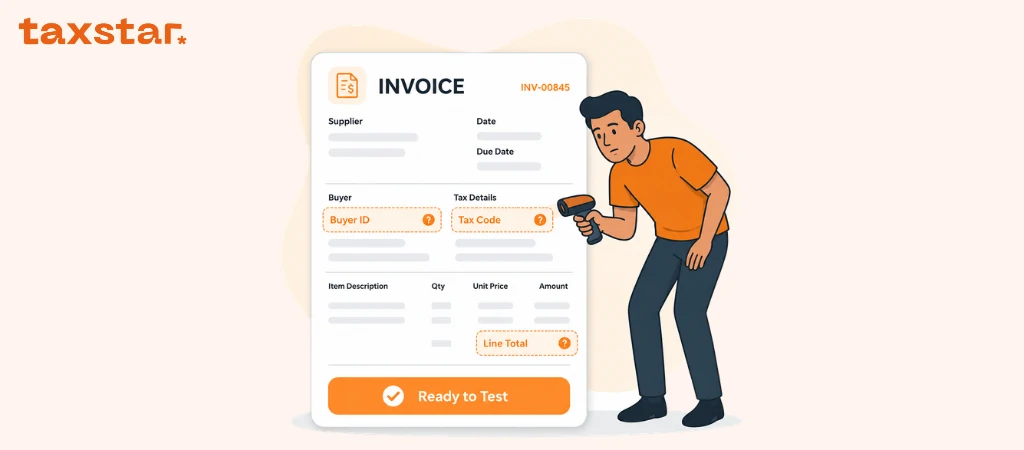
Structured e-invoice data stores the invoice content as fields. Seller details, buyer details, invoice numbers, dates, totals, VAT breakdown, line items. Each one sits in a defined place, with defined rules.
That is why a PDF can look perfect and still fail the e-invoicing process. The system is not reading your layout. It is reading your fields.
What structured e-invoice data looks like in day to day finance work
If you want the simplest way to picture this, think about how your team creates invoices today.
In many businesses, the “invoice” is a template plus some manual typing. Names, addresses, descriptions, sometimes even VAT notes. It all still ends up on the PDF, so it feels fine.
Structured e-invoice data works differently.
It expects the key invoice details to already exist as real system fields. Not free text. Not “we type it when we need it.” Actual stored values.
So your work starts to look like this:
- Are buyer identifiers stored in the customer record, every time
- Are addresses structured, or dumped into one field
- Are item and service records consistent, with tax tagging
- Do totals and VAT totals always reconcile, without manual tweaks
- Can you trace a credit note back to the original invoice cleanly
If you want a simple reference your team can use while checking this, you can visit UAE e-invoicing requirements.
XML is the exchange format, your data is the real job
XML comes up a lot in UAE e-invoicing conversations, and it can sound like a tech only topic.
In practice, most finance teams never touch XML directly.
Your ERP, billing tool, or your Accredited Service Provider (ASP) will handle the structured output.
Still, XML matters for one reason.
It does not hide weak data.
A PDF template can mask problems. Someone can adjust a line description, add a note, fix a mismatch by editing the output. It still “looks right.”
Structured e-invoice data does not work like that. It is strict. Missing required fields show up fast. Totals that do not match the breakdown show up fast. Identifiers that are inconsistent show up fast.
So the goal is not “get XML.”
The goal is “get clean invoice fields that can reliably become the structured message.”
Where the Accredited Service Provider (ASP) fits in the flow
A PDF process is simple.
Create invoice, export PDF, send it, done.
UAE e-invoicing adds an exchange model that includes an Accredited Service Provider (ASP). This changes the day to day flow in a real way.
It introduces validation and confirmation steps.
It also means a failure can happen before the buyer ever sees anything.
That is why teams need to plan for more than “we will integrate later.”
They need a clear loop for what happens when something fails:
- Who sees the validation error first
- Who fixes it at the source
- Who approves the resend
- Where you log the reason so it does not repeat next week
This is less about software and more about ownership. If no one owns the fix loop, every rejection becomes a mini crisis.
The PDF habits that create problems later
This is the part that usually clicks for teams. You will recognise at least a few.
Free text buyer details
Typing buyer names and addresses on the invoice works in PDF land. It is risky in structured e-invoicing. The system expects buyer details in proper fields, in a consistent format.
“Fix it on the PDF” corrections
In many teams, the fastest fix is editing the output and resending the PDF. In structured e-invoicing, the fix needs to happen in the source data so the structured message changes too.
Totals that look fine, yet do not reconcile
PDF layouts can hide rounding and allocation differences. Validation checks do not ignore that. The breakdown needs to match the totals cleanly.
Numbering that is “mostly fine”
A PDF workflow can survive messy numbering for years. Structured e-invoicing is less forgiving. Duplicate identifiers become a real risk once invoices come from more than one system.
Missing mandatory fields that no one noticed
A PDF process often relies on people catching gaps and patching them later. Structured e-invoicing pushes those gaps to the front. Missing required fields can cause a failed submission.
So yes, PDFs can still exist. Many customers will still ask for them.
They just cannot be your core compliance layer anymore. Relying on PDFs once e-invoicing is mandatory can mean late or non-compliant invoices, which can lead to UAE e-invoicing penalties.
What to do now
If your process today is mostly PDF based, this sequence is a solid start:
- List your real invoice scenarios
Include discounts, mixed VAT cases, credit notes, partial billing, and any “odd” cases that show up at month end.
- Check your source fields, not your template
Ask one question. Do we store these values as real fields in the system, or do we type them as we go.
- Clean master data early
Pick one owner for customer and supplier records. Focus on identifiers, addresses, and consistent naming.
- Lock invoice numbering rules
Agree on one rule across systems. Add a duplicate check before invoices go out.
- Write a rejection loop your team will follow
Keep it short. Error comes in, fix at source, retest, resend, log the reason.
For more details, you can visit UAE e-invoicing hub.
If you want help turning UAE e-invoicing requirements into a clean workflow your team can follow, contact us now for a free consultation.
FAQs
1) Is a PDF an e-invoice in the UAE
No. A PDF is a readable document. UAE e-invoicing relies on structured e-invoice data.
2) Can we still send PDFs to customers
Yes, a readable copy can still be shared. The structured message is the part used in the e-invoicing process.
3) What does structured e-invoice data mean
It means invoice details exist as defined fields that systems can read and validate, not only text on a document.
4) Why does XML matter in UAE e-invoicing
XML is used for the structured invoice message. Data quality matters most since the structured output reflects your stored fields.
5) Do I need an Accredited Service Provider (ASP)
Most businesses will use an ASP in the exchange model. The ASP supports validation and transmission steps.
6) What causes e-invoice rejection most often
Missing required fields, inconsistent buyer identifiers, totals that do not match the breakdown, VAT tagging issues, and duplicate invoice numbering.
7) What should finance teams fix first
Start with master data and field mapping. Clean identifiers and consistent records remove a lot of issues early.
8) What is the fastest way to prepare if we are still PDF based
Treat it like a data clean up project. List real scenarios, clean the fields, lock numbering rules, set error ownership, then test with real invoices.

.webp)
.webp)