
What to do 90 days before your UAE e-invoicing go live date
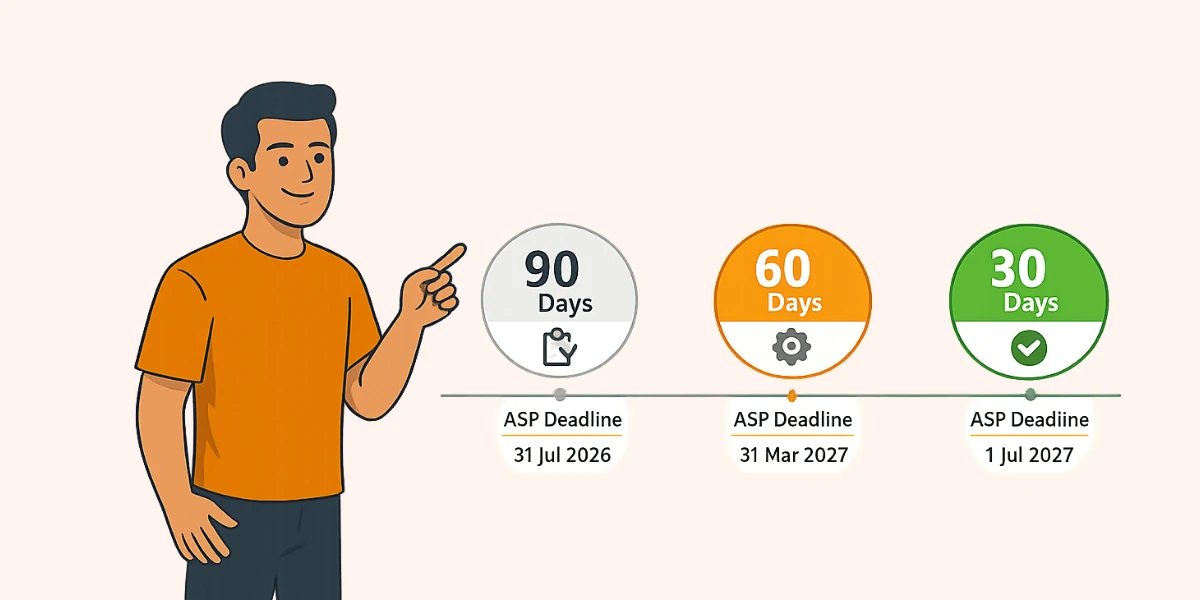
Ninety days can disappear fast.
A lot of teams feel like they still have time, then suddenly the go live date is close and the real work has barely started. That is when small gaps turn into bigger problems. Missing onboarding steps. Data issues. Testing delays. No clear process for fixing failed invoices.
The final 90 days should feel like a controlled prep window. Not a panic window. This is the stage where your team should already know its deadline, have its ASP process moving, clean up the invoice data, test the full flow, and lock who owns what.
Do not treat the final 90 days like waiting time
Go live is the point where the process starts running live. It is not the point where prep starts.
By the time your deadline arrives, your business should already have the setup in place to send, receive, and report e-invoices through the required flow. That means the final 90 days should be used to finish the work, not begin it.
This matters even more if your team has only been looking at the final implementation date. There is usually an earlier deadline to appoint your Accredited Service Provider, or ASP. That gap is there so you can onboard, test, and fix what needs fixing.
For more details, you can visit UAE e-invoicing timeline.
Days 90 to 60: finish your ASP and EmaraTax setup
The first part of the final stretch is about getting the setup in place and making ownership clear.
Your onboarding should start through EmaraTax. This is a business task, not something you wait for the ASP to start on its own. So this is the point where your team should move on the basics and close the open admin work.
At this stage, focus on:
- selecting your ASP
- closing the contract and commercial points
- starting onboarding through EmaraTax
- checking that your business details in EmaraTax are current
- confirming your TIN
- getting your participant setup through the ASP
This may feel like admin work, and it is. Still, it is the kind of work that blocks everything else if it slips.
One more thing matters here. Each Person or Government Entity should onboard with only one ASP for all e-invoicing requirements. So this is not a phase for half decisions. Pick the provider and move.
Days 60 to 30: clean up your data and system gaps
Once the ASP path is moving, the focus should shift to your source data and system setup.
This is where many teams get a reality check. The PDF may look fine. The invoice data behind it may still be messy.
So this stage should be used to check whether your systems can actually produce the required data points cleanly. That means looking at things like:
- buyer and seller details
- invoice dates and identifiers
- TIN related fields
- line items
- VAT treatment
- totals and tax totals
- credit note references
- numbering rules across systems
This is where structured e-invoice data becomes very real. The question is not whether the invoice looks correct on screen. The question is whether the data sits in the right fields and can move through the system without manual patching.
You should use this stage to run a gap check against your real invoice types too. Standard invoices. Discounts. Credit notes. Mixed VAT scenarios. Partial billing. Any edge cases your team deals with at month end.
For more details, you can visit UAE e-invoicing hub.
Days 30 to 14: test the full exchange and reporting flow
This part gets underestimated all the time.
Testing is not sending one clean sample invoice and calling it done. The full process needs to work end to end.
Your testing should cover the whole loop:
- sending invoice data to the ASP
- the ASP issuing the invoice onward
- receiving confirmation of success or failure
- receiving supplier e-invoices through the ASP
- reporting the required tax data
- receiving confirmation that the reporting step worked
That is the real test.
This is why your team should not rely on one “perfect” invoice. Use real life invoice scenarios. Use the messy ones too. Discounts. Mixed VAT treatment. Corrections. Missing data blocks. That is where the real issues show up.
This stage is where approval flows may need work too. Some businesses need changes in ERP flows, invoicing logic, or approval chains so the process runs properly once live.
The last 14 days: lock governance and error handling
Once testing is nearly done, the focus should move to control.
By this point, your team should know exactly how issues will be handled during and after go live. Without that, every failed invoice turns into a scramble.
The final stretch should answer simple questions like:
- who sees failed messages first
- who fixes source data
- who signs off resends or corrections
- how supplier side issues are handled
- who updates changes in business details later
- what happens if service is disrupted
This is where a simple governance model helps a lot. It does not need to be long. It just needs to be clear enough that people follow it under pressure.
What not to leave until the final week
The last week should be for calm checks, not first time decisions.
Do not leave these until the end:
- choosing the ASP
- checking your EmaraTax details
- confirming your TIN and participant setup
- deciding how invoice data reaches the ASP
- testing only one easy invoice
- fixing customer and supplier data late
- sorting approval flow changes at the last minute
- deciding who owns failed messages after go live
If these are still open close to launch, the final days get noisy fast.
A better final week is simple. Recheck the setup. Confirm the flow works. Make sure each owner knows what they are responsible for.
What to do now
If your go live date is 90 days away, use this order:
- start or finish ASP onboarding through EmaraTax
- confirm your TIN, participant setup, and company details
- run a gap check on the invoice data your systems need
- complete any ERP, accounting, or approval flow updates
- test exchange and tax data reporting end to end
- agree a clear error handling model with your ASP
- keep the final week for checks, not major fixes
If you want help turning your last 90 days before UAE e-invoicing go live into a clean workflow your team can follow, contact us now for a free consultation.
FAQs
1) Is there an official 90 day rule for UAE e-invoicing?
No. The 90 day window is a practical prep period. It helps teams finish onboarding, testing, and issue handling before go live.
2) What should happen first in the final 90 days?
ASP onboarding and EmaraTax checks should be moving early, together with TIN confirmation and participant setup.
3) Does the business or the ASP start onboarding?
The onboarding process starts with the business or Government Entity through EmaraTax.
4) What should we test before go live?
Test invoice data transmission, invoice exchange, confirmation messages, supplier invoice receipt, tax data reporting, and reporting confirmations.
5) Do we need to change our ERP or approval flow?
Some businesses do. It depends on how invoice data is generated, approved, and passed into the e-invoicing process.
6) What should be included in the error handling model?
It should cover who sees the issue, who fixes it, who approves the next step, and how repeat problems are logged.
7) What is the biggest risk of leaving ASP work too late?
It squeezes the time available for onboarding, testing, fixes, and internal signoff before go live.
8) What is the biggest mistake teams make in the last 90 days?
They treat it like extra time instead of working time. That is when issues stay hidden until the deadline feels too close.

.webp)
.webp)
.webp)